12 June, 2026
How to Protect Data in View: Technologies Behind Visual Data Security
Visual Data Security helps organizations protect sensitive information when it is visible on screens, mobile devices, virtual desktops, and shared work environments. As businesses adopt hybrid work, cloud collaboration, remote access, and AI-powered workflows, a growing amount of sensitive information is exposed at the visibility layer, often referred to as Data in View.
Traditional security controls focus on protecting data at rest and in transit, but they often provide limited protection once information becomes visually accessible. Protecting Data in View requires technologies designed to secure information at the point of visibility, helping organizations reduce exposure, increase accountability, and strengthen data protection strategies.
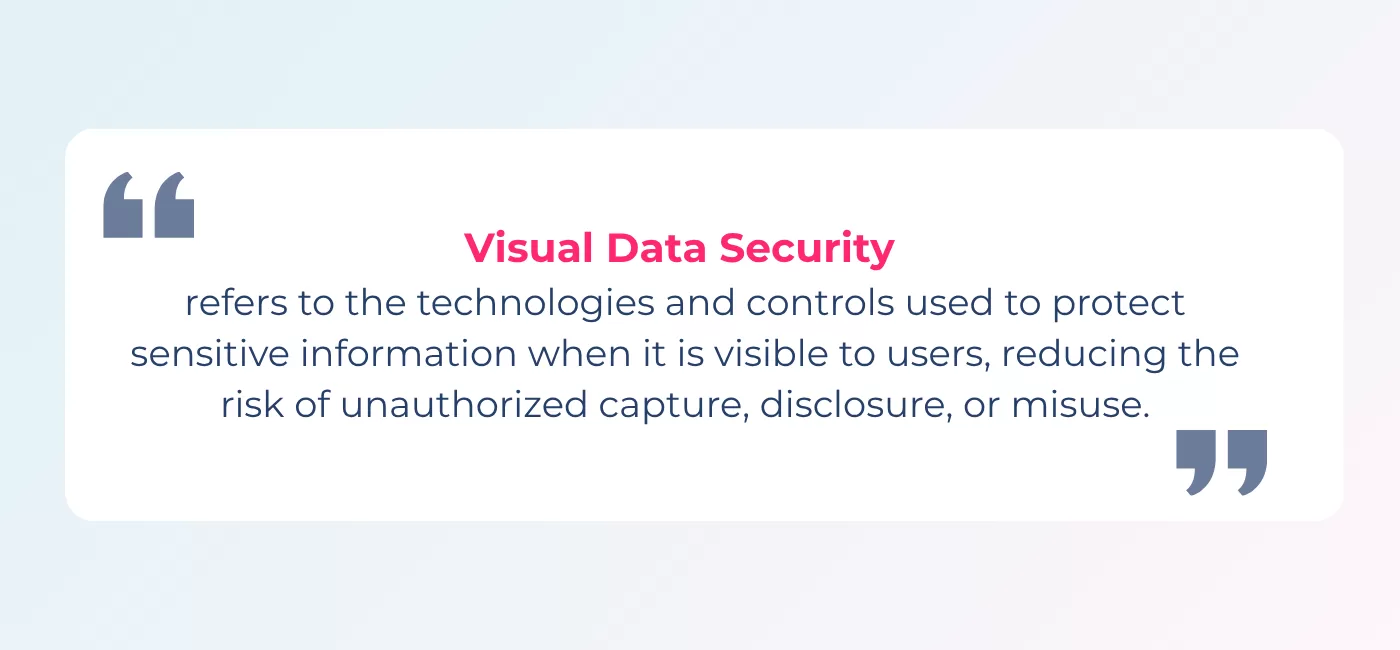 Visual Data Security refers to technologies designed to protect sensitive information while it is visible on screens, in shared sessions, on mobile devices, or in printed documents.
Instead of securing only access to systems, Visual Data Security secures the visibility of information itself.
Its objective is to:
Visual Data Security refers to technologies designed to protect sensitive information while it is visible on screens, in shared sessions, on mobile devices, or in printed documents.
Instead of securing only access to systems, Visual Data Security secures the visibility of information itself.
Its objective is to:
Visual Data Security Technologies That Protect Sensitive Information
The Growing Risk of Visual Data Exposure
Traditional cybersecurity tools are highly effective at protecting stored data and network communications. However, most lose visibility once information appears on screen. This creates multiple exposure points:- Screenshots shared externally
- Mobile phone photography of sensitive systems
- Unauthorized screen recording
- Remote collaboration exposure
- Insider data capture
- Sensitive dashboards visible in public or shared environments
- AI tools processing copied visual content
- Printed document leakage without traceability
Visual Data Security Explained
Visual Data Security refers to technologies designed to protect sensitive information while it is visible on screens, in shared sessions, on mobile devices, or in printed documents.
Instead of securing only access to systems, Visual Data Security secures the visibility of information itself.
Its objective is to:
- Deter unauthorized capture
- Increase accountability
- Trace data exposure
- Reduce insider risk
- Strengthen compliance
- Protect sensitive information beyond traditional access controls
Organizations looking for a broader overview of the category can explore our guide to Visual Data Security best practices .
Key Technologies Behind Visual Data Security
Organizations protect Data in View through a combination of deterrence, traceability, and prevention technologies. These controls help protect sensitive information once it becomes visually accessible, reducing the risk of unauthorized capture, sharing, or disclosure.Dynamic Screen Watermarking
Screen watermarking overlays dynamic user-identifiable information directly onto screens displaying sensitive content. These watermarks may include the username, email address, IP address, session ID, Timestamp, and other information. The objective is both deterrence and forensic traceability. When users know captured content can be traced back to them, the likelihood of unauthorized screenshots, photography, or sharing decreases significantly. This technology is increasingly adopted in sectors handling confidential or regulated information.Mobile Screen Watermarking
As enterprise workflows move to mobile devices, organizations face increasing risks of mobile data exposure. Mobile screen watermarking extends visual protection to smartphones and tablets by embedding user-specific watermarks directly into mobile application interfaces. This is particularly important for:- Healthcare mobility applications
- Government field operations
- Financial applications
- Executive access portals
- Secure messaging environments
Screenshot Prevention Technologies
Some environments require active prevention rather than only deterrence. Screenshot prevention technologies help block:- Native screenshot functions
- Screen recording attempts
- Certain capture utilities
- Unauthorized duplication methods
Printing Watermarks and Traceability
Visual exposure extends beyond screens. Organizations also protect printed sensitive documents through dynamic print watermarking technologies that embed visible or invisible identifiers into printed output. This enables organizations to:- Trace document origin
- Identify leak sources
- Increase accountability
- Reduce unauthorized sharing
Why Traditional Security Alone is No Longer Enough
Many organizations already invest heavily in:- DLP
- SIEM
- Zero Trust
- IAM
- Encryption
- Endpoint protection